The stages of Ubiquitopia
As Camp 6 Productions and Nøff Nøff BBQ prepare to host the 22nd annual Ubiquitopia, it is appropriate to reflect on the physical platforms that have supported the music over more than two decades. The title is intentional. The stages of the event have evolved in parallel with the gathering itself—each iteration shaped by practical necessity, acoustic realities, weather, and the consistent principle that music and food belong together at the center of the communal experience.
In 2004 the inaugural Ubiquitopia 1 had no stage at all. Ubiquitone simply performed on the grass. Not long afterward, Ubiquitone constructed a portable wooden structure with a tarp that served for a number of years.
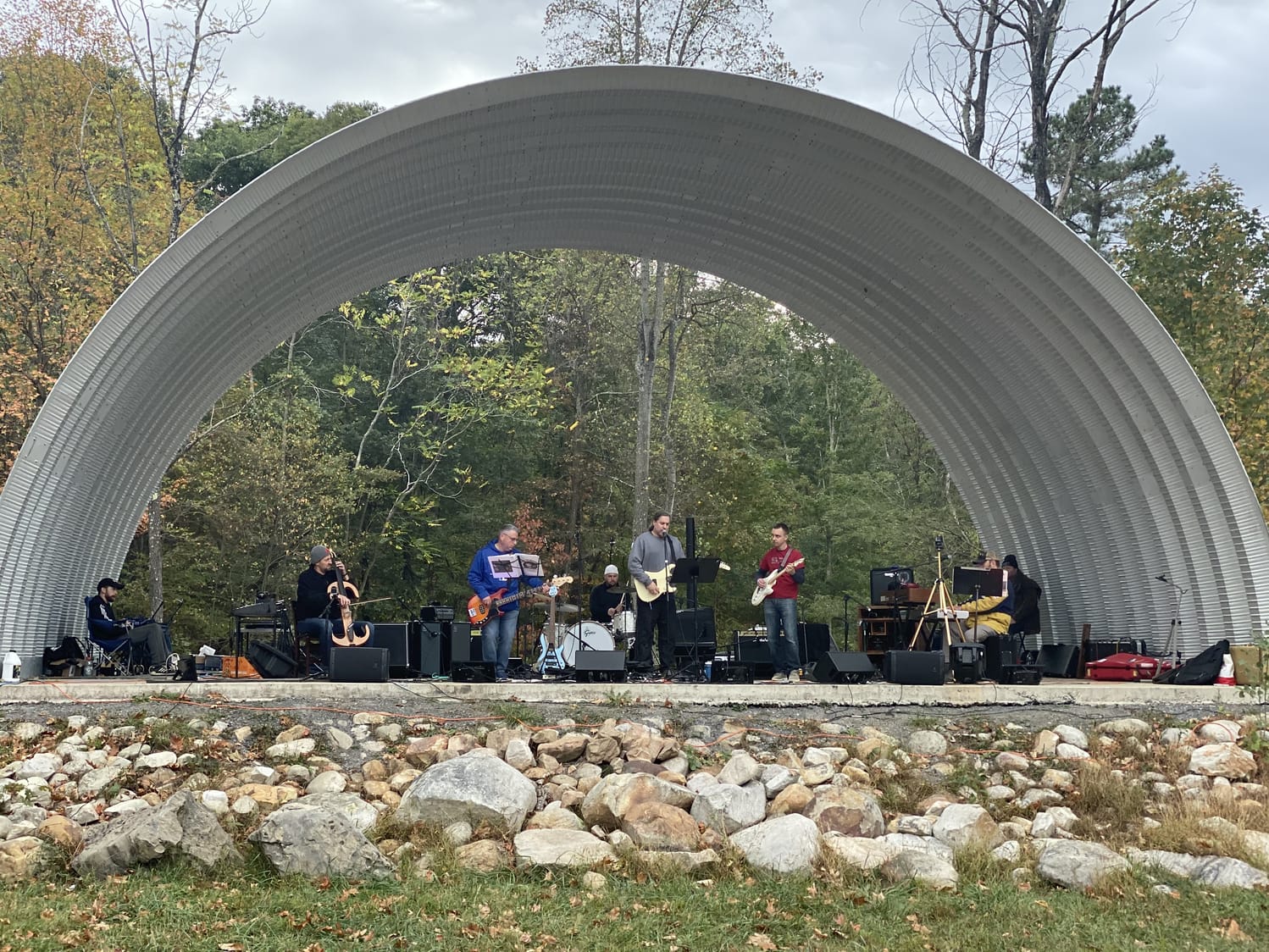
A later chapter introduced a large, permanent concrete amphitheater built by the site owner. The structure is imposing and architecturally distinctive, with a broad arched roof of corrugated metal. While visually striking and easy to illuminate, the location proved less than ideal. It sat at a considerable distance from the main fire and the food area, and the hard surfaces produced a pronounced echo that compromised the listening experience. The separation between music and the rest of the gathering was felt by both performers and attendees.
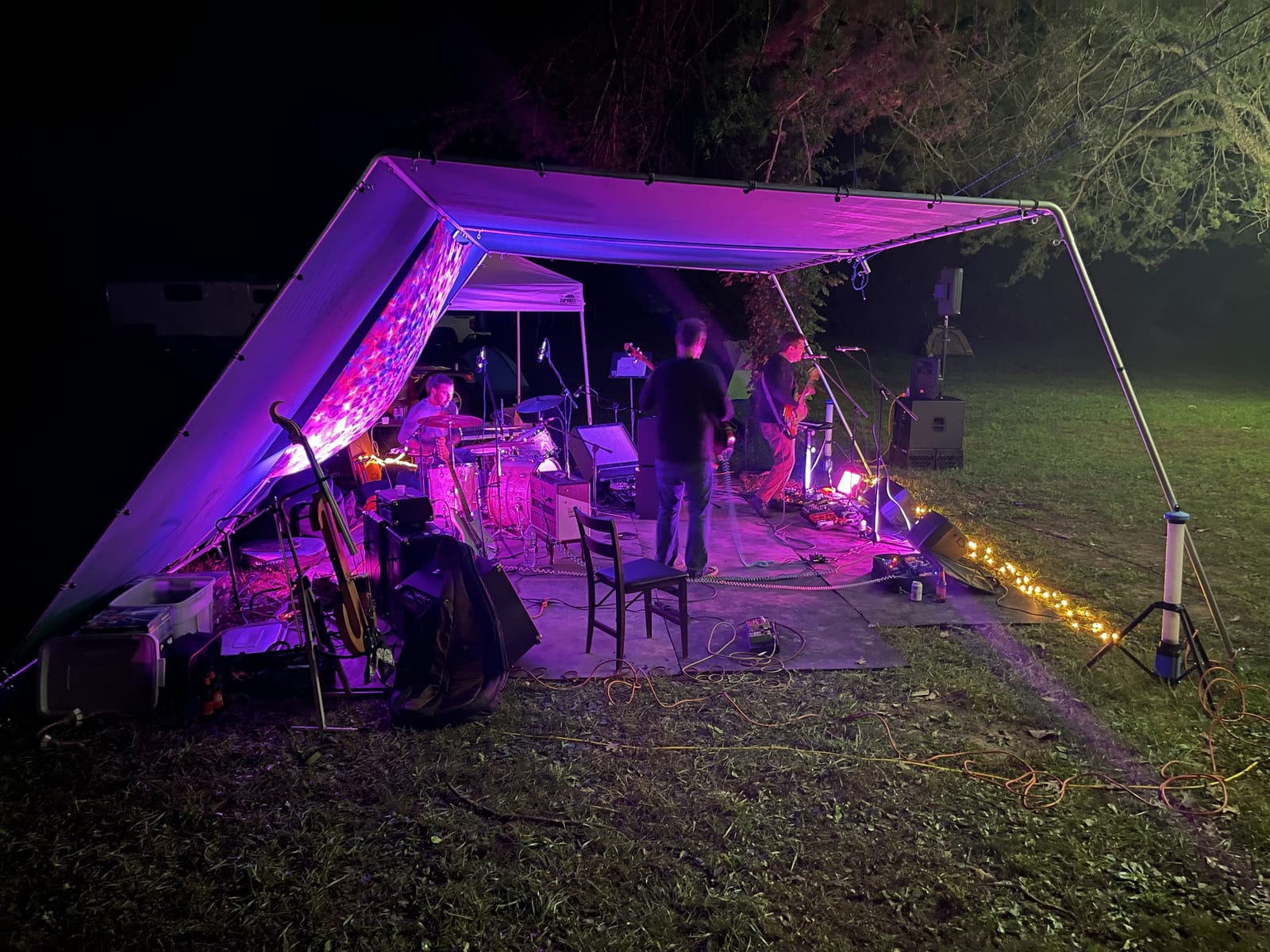
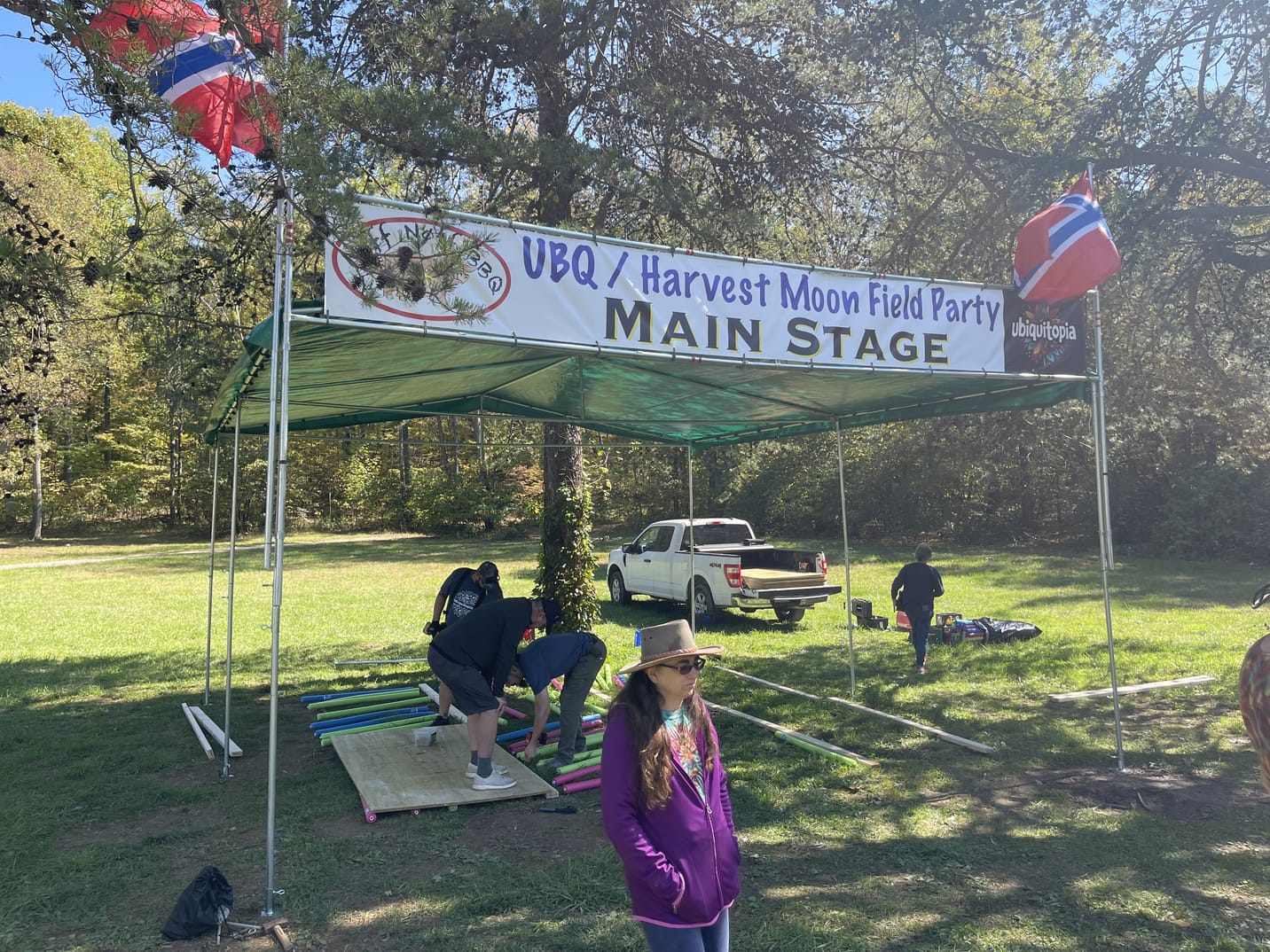
That observation led to a deliberate return to a more intimate arrangement. Recognizing that the music belongs near the food, we once again constructed a portable stage closer to the heart of the field. In 2021 this became Stage 3.0: a modest green canopy structure with a colorful backdrop, limited floor space created by a slanted rear wall, and the practical necessity of support ropes. It was imperfect, yet it restored proximity and function.
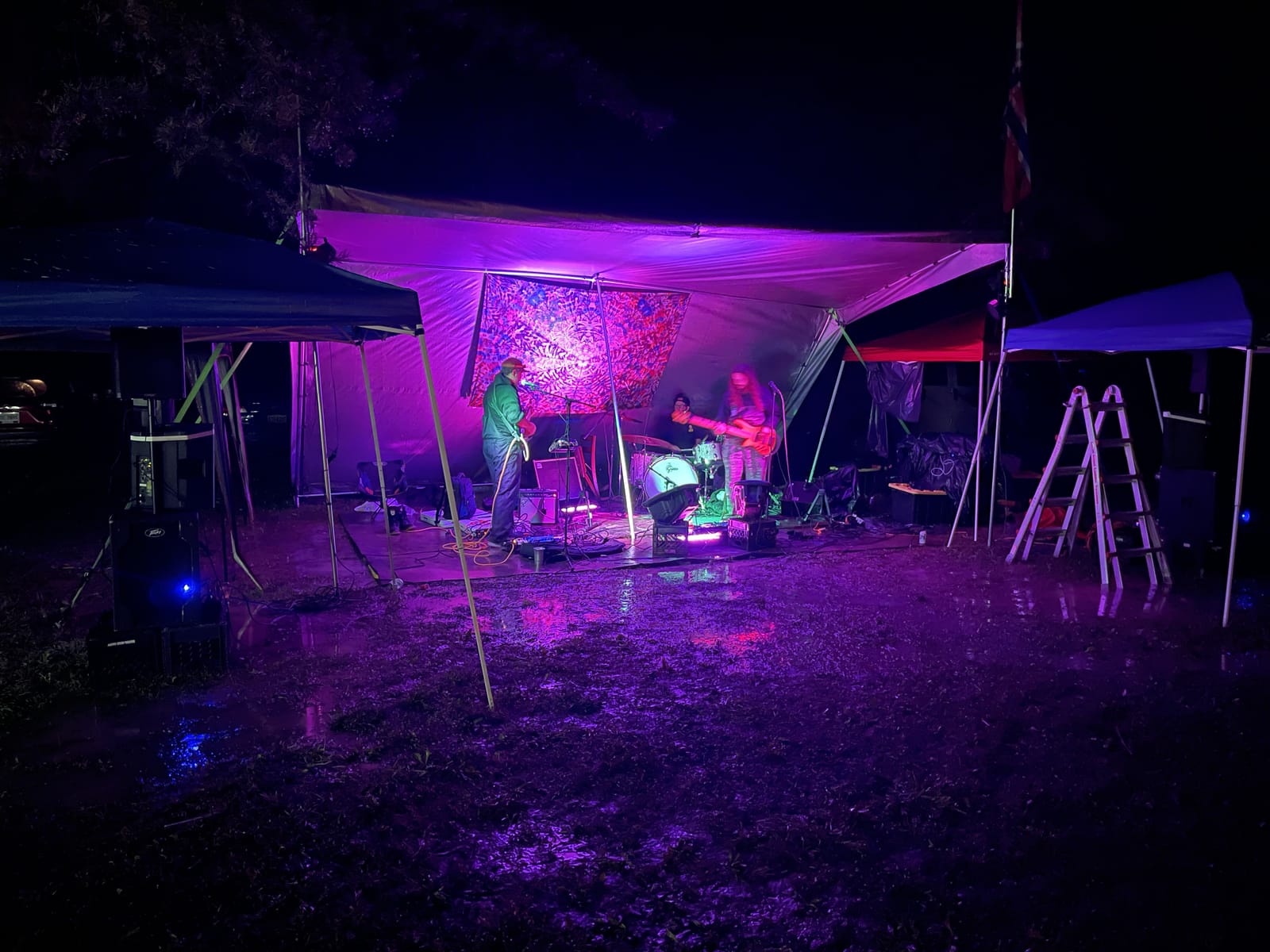
The following year brought measurable refinements. Straight front posts replaced the earlier geometry, structural support improved enough to eliminate the ropes, Norwegian flags appeared, and overall height increased. These changes produced a cleaner and more stable platform. Unfortunately, the design still collected rainwater. When substantial precipitation arrived, the stage collapsed. With community assistance it was rebuilt by Saturday, and the bands continued to perform—even with a temporary support pole standing in the middle of the performance area under the purple lights and falling rain. The resilience of that weekend remains a defining memory.
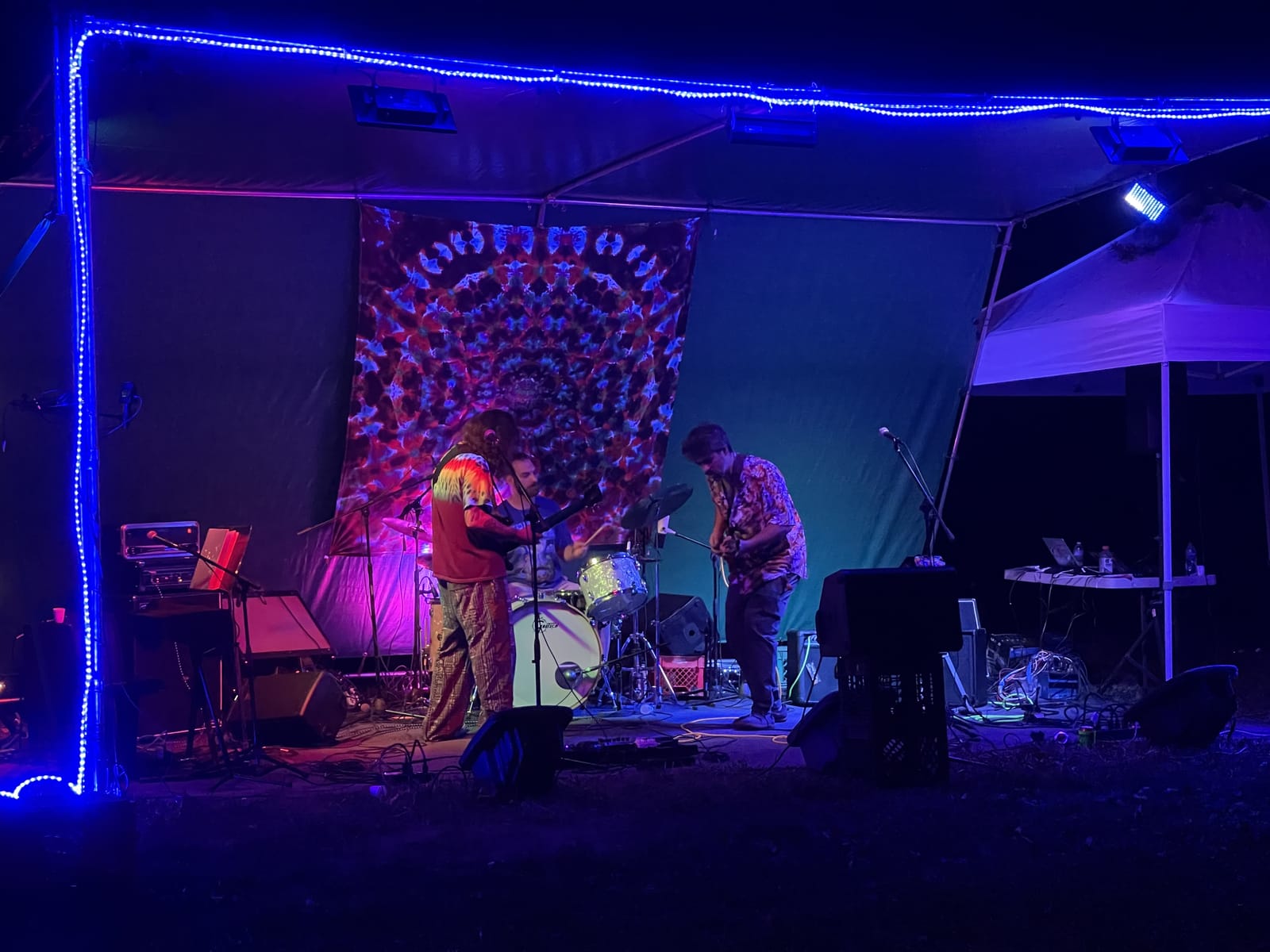
In 2023 further structural reinforcements were added, lighting was improved, and the stage continued to host the event’s characteristic mix of local and visiting musicians, including Odder.
The most substantial advance arrived in 2024. A new stage measuring 20 by 20 feet and standing 10 feet high was erected. It featured a straight rear wall, a pitched roof intended to shed water, integrated lighting, and a prominent front banner identifying the UBQ / Harvest Moon Field Party. Two additional 10-by-10-foot wings were incorporated specifically to protect sound equipment, and a better floor was constructed. The result is a far more capable and weather-resistant platform that finally places the music in an environment commensurate with the scale and spirit of the gathering.
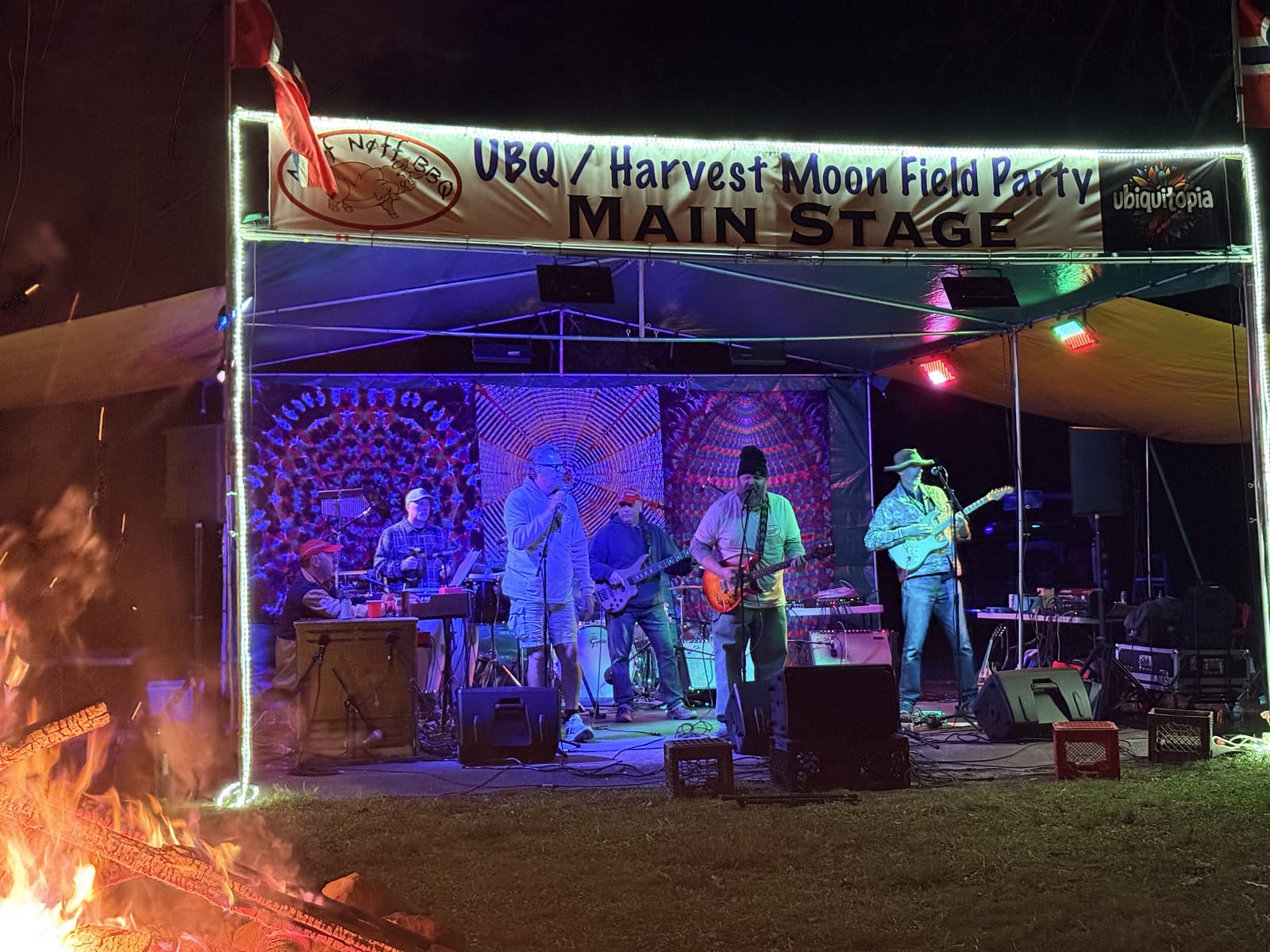
Across twenty-two years, the stages of Ubiquitopia have moved from open grass to temporary wood, to an industrial concrete amphitheater, and then through successive generations of purpose-built canopies refined by experience, weather, and community labor. Each version has been a practical response to the same underlying values: keeping the music close to the food and the people, adapting to the realities of an outdoor event, and improving what can be improved while preserving the informal, collaborative character of the event. As the twenty-second Ubiquitopia approaches, that history of iterative, community-driven improvement remains one of the quiet constants of the gathering.